
How Property Division Works in an Idaho Divorce

When a couple gets divorced, they must decide how to divide their debts and property. If they can’t come to an agreement, the court will step in and do it for them.
Idaho follows community property laws. This means that most property and debts a couple gets during the marriage belong equally to both spouses. Because of this, Idaho courts generally divide community property equally between the spouses unless there is a reason to do otherwise.
Some couples are actually able to agree on how to divide their property and debts. If they can’t agree, however, they might have to go to court and ask a judge to decide how everything should be split.
Whether you and your spouse divide your property yourselves or a court makes the decision, the process usually follows a few basic steps. First, it must be decided whether each piece of property or debt is community property or separate property. Next, the value of the community property must be determined. After that, the property is divided between the spouses.
Because these decisions can affect your finances for many years, it can be helpful to speak with an Idaho divorce lawyer. A trusted Idaho divorce lawyer can explain how the law applies to your situation and help protect your interests during the property division process.
Separate Property and Community Property
Under Idaho law, property that one spouse owned before the marriage is usually considered that person’s separate property. Property that a spouse receives as a gift or inheritance during the marriage is also usually separate property. However, the spouse claiming the property must be able to prove it with financial records or other documents.
Separate property can also include things a person buys using money from their own separate property. However, income from separate property may remain separate property, but it can become community property if it results from the labor or efforts of either spouse during the marriage. For example, rent from a property or profits from a business may be treated as community property unless the couple clearly agrees in writing that the income will remain separate.
Spouses can change property from separate property to community property, or from community property to separate property. For example, if one spouse owned the family home before the marriage, that spouse could change the title so the home becomes community property. A court may see this as a sign that the owner intended to share the home with the marital community.
It is also possible to change community property into separate property. For example, one spouse can sign a deed that transfers full ownership of the property to the other spouse. This can make the property the separate property of that spouse.
A spouse can unintentionally change separate property into community property. This can happen when separate property and marital property are mixed together, or “commingled.”
A bank account that one person owned before getting married can become partly community property if marital funds are put into it, especially if the funds can’t be easily traced. If both spouses help pay the mortgage or other costs for the home, a home that one spouse owned before the marriage may also become community property, either fully or in part.
Some assets can be both community property and separate property. This can happen if some of the asset was made before the marriage and some was made during the marriage.
For instance, a retirement account could have money that one spouse saved before the marriage and money that was added to it during the marriage. A business that one spouse started before the marriage and kept running after the marriage can be both separate property and community property.
It can be hard to tell what is community property and what is separate property. This is especially true if one spouse owned a business or other property and the other spouse helped by working in the business or giving money during the marriage.
If your property situation is complicated, it may be helpful to speak with an attorney for advice. When spouses cannot agree about who owns certain property, a court may need to decide whether the property became a gift to the marriage or whether the original owner should receive some or all of the value back.
Calculating Property Values
The spouses usually decide how much each piece of property is worth. If they cannot agree, the court may decide the value.
Sometimes an appraisal is used to find the value of property such as a home, antiques, or artwork. Retirement accounts can be harder to value, and couples may need help from a financial professional, such as an accountant or another expert, to determine their value.
Splitting Up the Property
Spouses can divide property in several ways. They may agree that each person keeps certain items. One spouse may also buy the other spouse’s share of a piece of property. Another option is to sell the property and divide the money from the sale.
In some cases, couples agree to continue owning property together even after the divorce. Many people do not prefer this option because it keeps a financial connection between the former spouses. However, some couples decide to keep the family home until their children finish school. Others may keep investment property if they believe it may increase in value over time.
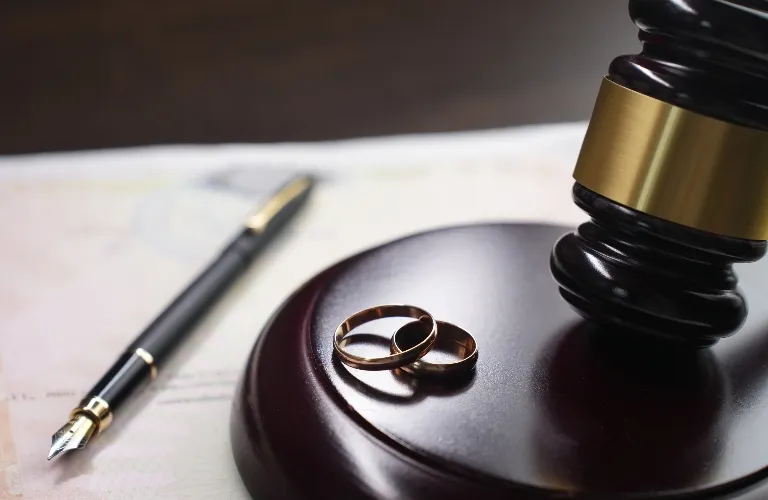
When a couple gets divorced, they also need to decide who will be responsible for the debts from the marriage. This can include things like mortgages, car loans, and credit card balances.
It is important to understand that a divorce agreement does not change the rights of the lenders. A creditor may still try to collect the debt from either spouse, even if the divorce order says only one spouse is responsible for it.
If a debt is assigned to one spouse, the other spouse may ask the court to place a lien on that spouse’s separate property to help make sure the debt is paid. However, many couples try to pay off as many marital debts as possible once the divorce has been finalized. For example, if the familial home is getting sold or one spouse is buying out the other, refinancing the mortgage may allow the couple to pay off some of those debts.
Discuss Your Case With an Idaho Divorce Lawyer
Dividing property and debts in a divorce can be difficult, especially when you are trying to protect your financial future. Understanding your rights under Idaho law can help you make better decisions during this process.
If you are going through a divorce and have questions about property division, contact an Idaho divorce lawyer at Harrington Law. Call (208) 599-8530 or reach out online to discuss your situation and learn how we may be able to help.